How to Test for Chemical Smells in Your Bedroom at Home
If your bedroom smells off or feels heavy, you're not imagining it. Here's how to identify what's causing it without expensive equipment.
Start Free Assessment Now1027 people have completed this assessment
20 minutes • Instant results • No devices needed
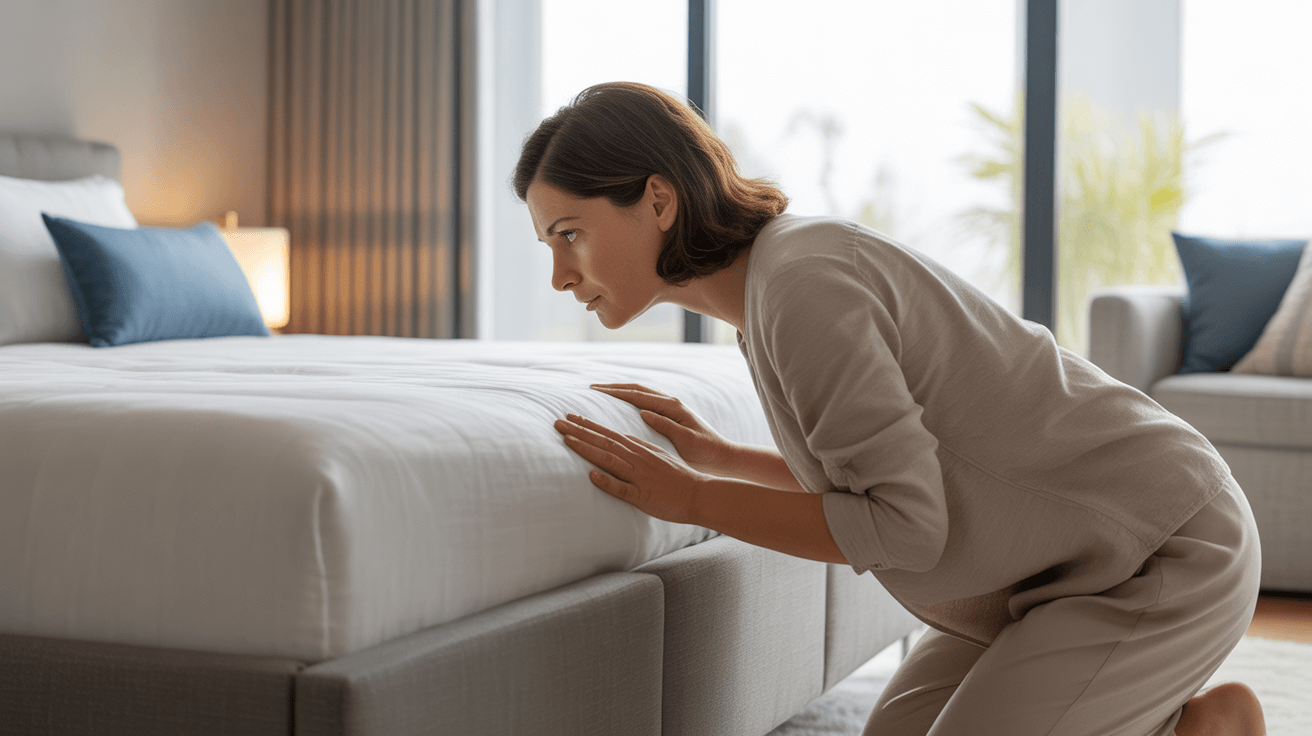
If your bedroom smells off or feels heavy, you're not imagining it.
That chemical smell, sweet odor, or new furniture scent you notice when you walk into your bedroom isn't normal. Your body is detecting something in the air, and it's worth investigating before you spend months sleeping in it.
The challenge is that chemical smells in bedrooms can come from several different sources, and knowing which one applies to YOUR situation determines what you should do about it.
Here's how to test for chemical smells in your bedroom using simple observation methods, then understand what the pattern might indicate.
Two Quick DIY Checks You Can Do Right Now
No equipment needed. Just your nose and some basic observation.
Test #1: The Morning Smell Check
What to do: Tomorrow morning, before opening windows or turning on fans, walk into your bedroom from another room and pay attention to the first thing you smell.
What you're testing: Bedrooms accumulate whatever's in the air overnight. If there's a chemical source, you'll smell it strongest after 6 to 8 hours of the door being closed.
What to notice:
- Does it smell sweet, sharp, or like plastic?
- Does the smell get weaker as you stand there (nose fatigue)?
- Is it stronger near specific furniture, bedding, or the closet?
Test #2: The Isolation Sniff Test
What to do: Get your face close to individual items in your bedroom. Mattress, pillows, dresser drawers, closet contents, area rugs, curtains. Breathe in.
What you're testing: Chemical off-gassing is strongest at the source. If something smells noticeably different up close, that's your probable culprit.
What to notice:
- Does your mattress smell sweet or chemical when you press your face into it?
- Do dresser drawers smell like adhesive or formaldehyde?
- Does clothing in your closet smell different than clothing stored elsewhere?
- Do curtains or area rugs have a noticeable odor?
Important: If the smell is accompanied by dizziness, headaches, nausea, or difficulty breathing, leave the room and contact a professional immediately. Strong chemical odors can indicate hazardous off-gassing or other serious air quality issues.
What Chemical Smells Might Indicate
Based on your observations, here's what different patterns suggest.
If the smell is strongest in the morning after the room's been closed overnight:
This suggests off-gassing from furniture, flooring, or fabrics. VOCs (volatile organic compounds) accumulate in closed spaces. The smell dissipates when you open doors/windows because fresh air dilutes the concentration.
- New furniture (especially particleboard, MDF, or laminate) releases formaldehyde
- New mattresses or memory foam release various VOCs for weeks or months
- Carpet, area rugs, and synthetic fabrics can off-gas for months after installation
- Fresh paint, even "low-VOC" paint, continues releasing chemicals for weeks
If you can trace the smell to specific furniture or bedding:
This is direct off-gassing from that item. Common sources include:
- Composite wood furniture (dressers, nightstands, bed frames)
- Memory foam mattresses or pillows
- New bedding treated with wrinkle-resistant or stain-resistant chemicals
- Synthetic curtains or window treatments
If the smell is sweet, sharp, or smells like plastic:
You're likely detecting VOCs from synthetic materials or adhesives. Different chemicals have characteristic smells:
- Sweet odor often indicates formaldehyde (from pressed wood or adhesives)
- Sharp chemical smell suggests paint VOCs or cleaning product residue
- Plastic smell indicates off-gassing from vinyl, synthetic fabrics, or foam
If the smell is musty or earthy rather than chemical:
This isn't off-gassing—it's likely mold or moisture-related. While this guide focuses on chemical smells, musty odors require different investigation.
The key distinction: Chemical smells from off-gassing tend to be strongest when the room is closed and improve with ventilation. Mold smells are strongest in areas with moisture and don't necessarily improve with air flow. If you're not sure which you're dealing with, broader investigation helps clarify things.
Why Chemical Smell Is Just One Signal

Chemical smell tells you there's something in your bedroom air worth investigating. But most homes don't have just one isolated air quality issue. They have overlapping factors.
Here's what the smell alone doesn't tell you:
- Whether your ventilation is sufficient to clear the off-gassing over time
- If humidity levels are allowing VOCs to persist longer than normal
- Whether other rooms have similar issues you're not noticing yet
- If the smell is masking other air quality problems (like poor filtration or biological growth)
- Whether your symptoms are solely from the chemical smell or from combined factors
This is one signal. But most homes have multiple overlapping air factors that need investigation.
Why EezyAir's Assessment Helps
Pattern Recognition
We investigate when smells appear, where they're strongest, and what environmental factors are present alongside them
Context Beyond the Smell
Chemical odors might be the obvious issue, but ventilation, humidity, and circulation patterns determine how long they persist
No Equipment Required
Our assessment uses observation and behavior patterns, not expensive air quality monitors or professional testing
The free assessment gives you a systematic investigation of your bedroom environment. What's present, when problems appear, what makes them better or worse. Then you get organized results showing what to address first.
What the Free Assessment Covers
20 minutes of targeted questions about your bedroom environment, then instant organized results.
When you start the assessment: You'll first select which symptom or concern brings you here. For chemical smell issues, select "👃 Unpleasant or unusual odors" so the assessment asks the right questions for your situation. The assessment investigates patterns around odors, then looks at your full home environment to give you complete guidance.
🆓 No-Cost Improvements
Immediate actions you can take: ventilation changes, furniture placement, testing methods, and observation strategies that cost nothing.
🛒 Products That May Help
IF your patterns suggest specific needs, guidance on which products address YOUR diagnosed triggers. Not generic recommendations—solutions matched to your investigation results.
👷 When to Call a Professional
Clear direction on when DIY investigation isn't enough, which specialist to contact for YOUR situation, and what to ask them based on your findings.
Optional upgrade available: After your free assessment, you can choose to have a U.S. based analyst review your specific questions, help with unique situations, or look at photos you want to share for better understanding. Under $150 for personalized expert review. Start free, upgrade only if you need it.
Stop Guessing at What's Causing the Smell
You've identified that there's a chemical smell in your bedroom. Now investigate the full context before spending money on solutions that might not address the actual issue.
The assessment takes 20 minutes and gives you organized direction on what to do next.
Start Your Free DIY Home Air Quality Assessment
No signup. No devices. Just clarity.
Begin Assessment NowNo credit card required • Instant results • 20 minute assessment